Wednesday, 26 September 2012

Orphanage Opening Scene Analysis

The Orpahage

Storyline


Laura, a former orphan, raises her adopted son Simón together with her husband Carlos in an old house and former orphanage where she was raised. While at the orphanage Simón tells Laura that he has five invisible friends which she believes are a product of his active imagination. Laura decides to reopen the orphanage to cater for disabled children and throws a party. During the party Simón tries to persuade Laura to go and take a look at his friends cabin but she's too busy. Later on she sees a mysterious masked boy and realizes that Simón has also disappeared. Laura feels the presence of other people in the house and months later Laura invites a team of parapsychologists to try to unravel the mystery. Written by Claudio Carvalho, Rio de Janeiro, Brazil

The Regression Scene - Looking at sound


Monday, 17 September 2012

A2 Recommended Film List


Throughout the course I will be adding to this list of recommended films. Films that have influenced and effected the way I view film and have been landmarks in their own right within the industry.

1. American History X 1998


Storyline
Derek Vineyard is paroled after serving 3 years in prison for killing two thugs who tried to break into/steal his truck. Through his brother, Danny Vineyard's narration, we learn that before going to prison, Derek was a skinhead and the leader of a violent white supremacist gang that committed acts of racial crime throughout L.A. and his actions greatly influenced Danny. Reformed and fresh out of prison, Derek severs contact with the gang and becomes determined to keep Danny from going down the same violent path as he did.
2. Oldboy 2003


Storyline
An average man is kidnapped and imprisoned in a shabby cell for 15 years without explanation. He then is released, equipped with money, a cellphone and expensive clothes. As he strives to explain his imprisonment and get his revenge, Oh Dae-Su soon finds out that his kidnapper has a greater plan for him and is set onto a path of pain and suffering in an attempt to uncover the motive of his mysterious tormentor.
3. Little Miss Sunshine 2006


Storyline
In Albuquerque, Sheryl Hoover brings her suicidal brother Frank to the breast of her dysfunctional and bankrupted family. Frank is homosexual and expert in Proust, and tried to commit suicide when he was rejected by his boyfriend and his great competitor became renowned and recognized as number one in the field of Proust. Sheryl's husband Richard is unsuccessfully trying to sell his self-help and self-improvement technique using nine steps to reach success, but he is actually a complete loser. Her son Dwayne has taken a vow of silence as a follower of Nietzsche and aims to be a jet pilot. Dwayne's grandfather Edwin was sent away from the institution for elders Sunset Manor and is addicted in heroin. When her seven years old daughter Olive has a chance to dispute the Little Miss Sunshine pageant in Redondo Beach, California, the whole family travels together in their old Volkswagen.

4. Some Like It Hot 1959


Storyline
When two Chicago musicians, Joe and Jerry, witness the the St. Valentine's Day massacre, they want to get out of town and get away from the gangster responsible, Spats Colombo. They're desperate to get a gig out of town but the only job they know of is in an all-girl band heading to Florida. They show up at the train station as Josephine and Daphne, the replacement saxophone and bass players. They certainly enjoy being around the girls, especially Sugar Kane Kowalczyk who sings and plays the ukulele. Joe in particular sets out to woo her while Jerry/Daphne is wooed by a millionaire, Osgood Fielding III. Mayhem ensues as the two men try to keep they true identities hidden and Spats Colombo and his crew show up for a meeting with several other crime lords.
5. Boyz N The Hood 1991


Storyline
John Singleton's portrayal of social problems in inner-city Los Angeles takes the form of a tale of three friends growing up together 'in the 'hood.' Half-brothers Doughboy and Ricky Baker are foils for each other's personality, presenting very different approaches to the tough lives they face. Ricky is the 'All-American' athlete, looking to win a football scholarship to USC and seeks salvation through sports, while 'Dough' succumbs to the violence, alcohol, and crime surrounding him in his environment, but maintains a strong sense of pride and code of honor. Between these two is their friend Tre, who is lucky to have a father, 'Furious' Styles, to teach him to have the strength of character to do what is right and to always take responsibility for his actions.
6. In America 2002


Storyline
Following the tragic death of their two-year-old son Frankie, Irish couple Johnny and Sarah Sullivan and their remaining two offspring, 10 year old Christy Sullivan and 5 year old Ariel Sullivan, emigrate illegally to the United States via Canada with little in their pockets. Their final destination is Manhattan where Johnny hopes to work as a stage actor. They move into a unit in a run town tenement housed primarily with drug addicts, transvestites and one tenant coined "the man who screams". They do whatever they can to eke out a supportive family environment in this difficult situation, the support which ultimately extends to those around them, most specifically "the screamer" who turns out to be an African-American artist named Mateo with AIDS. But the memory of Frankie hangs over the family in good and bad ways, especially as Sarah learns she's pregnant.

7. It's a wonderful Life 1946


Storyline
George Bailey has spent his entire life giving of himself to the people of Bedford Falls. He has always longed to travel but never had the opportunity in order to prevent rich skinflint Mr. Potter from taking over the entire town. All that prevents him from doing so is George's modest building and loan company, which was founded by his generous father. But on Christmas Eve, George's Uncle Billy loses the business's $8,000 while intending to deposit it in the bank. Potter finds the misplaced money and hides it from Billy. When the bank examiner discovers the shortage later that night, George realizes that he will be held responsible and sent to jail and the company will collapse, finally allowing Potter to take over the town. Thinking of his wife, their young children, and others he loves will be better off with him dead, he contemplates suicide. But the prayers of his loved ones result in a gentle angel named Clarence coming to earth to help George.

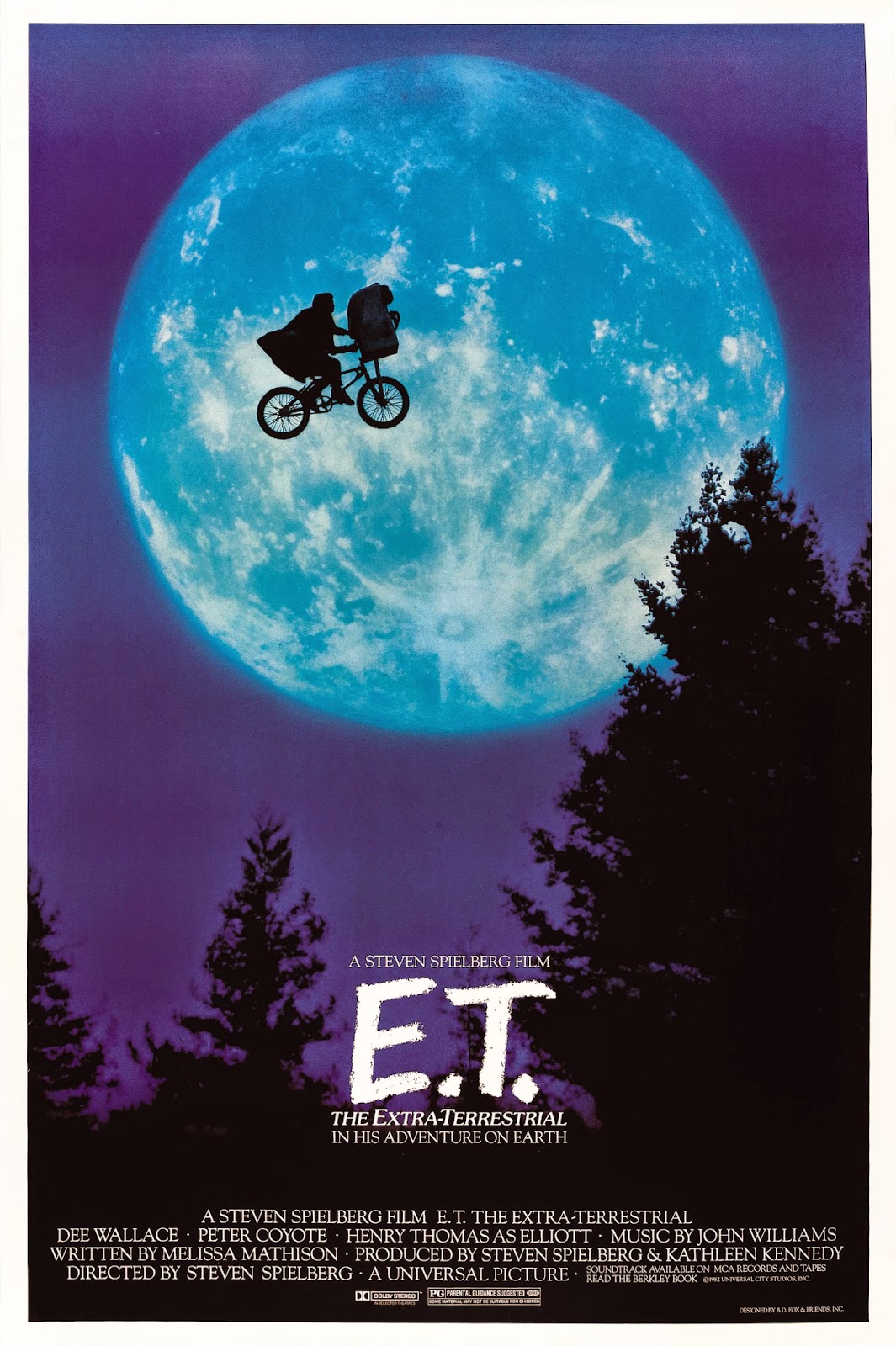
8. E.T. The Extra-terrestrial 1982


Storyline
While visiting the Earth at Night, a group of alien botanists is discovered and disturbed by an approaching human task force. Because of the more than hasty take-off, one of the visitors is left behind. The little alien finds himself all alone on a very strange planet. Fortunately, the extra-terrestrial soon finds a friend and emotional companion in 10-year-old Elliot, who discovered him looking for food in his family's garden shed. While E.T. slowly gets acquainted with Elliot's brother Michael, his sister Gertie as well as with Earth customs, members of the task force work day and night to track down the whereabouts of Earth's first visitor from Outer Space. The wish to go home again is strong in E.T., and after being able to communicate with Elliot and the others, E.T. starts building an improvised device to send a message home for his folks to come and pick him up. But before long, E.T. gets seriously sick, and because of his special connection to Elliot, the young boy suffers, too. The situation gets critical when the task force finally intervenes. By then, all help may already be too late, and there's no alien spaceship in sight.


Storyline
In a remote area of Northern Kenya, activist Tessa Quayle is found brutally murdered. Tessa's companion, a doctor, appears to have fled the scene, and the evidence points to a crime of passion. Members of the British High Commission in Nairobi assume that Tessa's widower, their mild-mannered and unambitious colleague Justin Quayle, will leave the matter to them. They could not be more wrong. Haunted by remorse and jarred by rumors of his late wife's infidelities, Quayle surprises everyone by embarking on a personal odyssey that will take him across three continents. Using his privileged access to diplomatic secrets, he will risk his own life, stopping at nothing to uncover and expose the truth - a conspiracy more far-reaching and deadly than Quayle could ever have imagined.


Storyline
Set on an island off the coast of New England in the 1960s, as a young boy and girl fall in love they are moved to run away together. Various factions of the town mobilize to search for them and the town is turned upside down -- which might not be such a bad thing.

Monday, 28 May 2012

A2 Media G325 - How to Approach Q1a

Approaching Question 1a


These are the previous questions which came up for this part of the exam:

Describe how you developed research and planning skills for media production and evaluate how these skills contributed to creative decision making. Refer to a range of examples in your answer to show how these skills developed over time.

Describe the ways in which your production work was informed by research into real media texts and how your ability to use such research for production developed over time.

Describe how you developed your skills in the use of digital technology for media production and evaluate how these skills contributed to your creative decision making. Refer to a range of examples in your answer to show how these skills developed over time.

You will notice that each of these begins by asking you to 'describe' and then goes on to ask you to reflect in some way: "evaluate", "how you used" "how your skills developed". herein lies the key to this part of the exam! You only have half an hour for the question and you really need to make the most of that time by quickly moving from description (so the reader knows what you did) to analysis/evaluation/reflection, so he/she starts to understand what you learnt from it.

there are five possible areas which can come up
  • Digital technology
  • Research and Planning
  • Conventions of Real Media
  • Post-Production
  • Creativity.
If you look through those questions above, you will see that they all contain at least two of the five- creativity is mentioned (as 'creative decision making') in two of them alongside the main area (digital technology on one, research and planning skills in the other). In the third of those past questions , research is combined with conventions of real media. So as you can see, the question is likely to mix and match the five, so you HAVE to be able to think on your feet and answer the question that is there.

So, how do you get started preparing and revising this stuff? I would suggest that you begin by setting out, on cards or post-its, a list of answers to these questions:

What production activities have you done?

This should include both the main task and preliminary task from AS and the main and ancillaries at A2 plus any non-assessed activities you have done as practice, and additionally anything you have done outside the course which you might want to refer to, such as films made for other courses or skateboard videos made with your mates if you think you can make them relevant to your answer.

What digital technology have you used?

This should not be too hard- include hardware (cameras, phones for pictures/audio, computers and anything else you used) software (on your computer) and online programs, such as blogger, youtube etc

In what ways can the work you have done be described as creative?

This is a difficult question and one that does not have a correct answer as such, but ought to give you food for thought.

What different forms of research did you do?

Again you will need to include a variety of examples- institutional research (such as on how titles work in film openings), audience research (before you made your products and after you finished for feedback), research into conventions of media texts (layout, fonts, camera shots, soundtracks, everything!) and finally logistical research- recce shots of your locations, research into costume, actors, etc

What conventions of real media did you need to know about?

For this, it is worth making a list for each project you have worked on and categorising them by medium so that you don’t repeat yourself

What do you understand by ‘post-production’ in your work?

This one, I’ll answer for you- for the purpose of this exam, it is defined as everything after planning and shooting or live recording. In other words, the stage of your work where you manipulated your raw material on the computer, maybe using photoshop, a video editing program or desktop publishing.

For each of these lists, your next stage is to produce a set of examples- so that when you make the point in the exam, you can then back it up with a concrete example. You need to be able to talk about specific things you did in post-production and why they were significant, just as you need to do more than just say ‘I looked on youtube’ for conventions of real media, but actually name specific videos you looked at, what you gained from them and how they influenced your work.

This question will be very much about looking at your skills development over time, the process which brought about this progress, most if not all the projects you worked on from that list above, and about reflection on how how you as a media student have developed. Unusually, this is an exam which rewards you for talking about yourself and the work you have done!

Final tips: you need some practice- this is very hard to do without it! I’d have a crack at trying to write an essay on each of the areas, or at the very least doing a detailed plan with lots of examples. The fact that it is a 30 minute essay makes it very unusual, so you need to be able to tailor your writing to that length- a tough task!


Friday, 27 April 2012

How to Revise Successfully

Please find below a link to the Media Education website MediaEdu. On the site you will find useful tips and strategies for revising successfully for the media exams you will be taking in the Summer. Please take the time to explore the site.
MediaEdu
http://www.media.edusites.co.uk/

Friday, 16 March 2012

Royalty Free Soundtracks

Below is a link to Thebluemask.com one of many royalty free music download sites on the internet. The site contains many different albums and soundtracks for use in dramactic scences and films, ideally for Foundation Portfolio projects.


Wednesday, 14 September 2011

Jewson Film Foundation


The Jewson Film Foundation provides a total overview of how to make a professional feature film. The JFF is also a nest bed from which Jewson Film Productions hopes to discover new talent, whether it be directors, writers or cinematographers.


Why was the Foundation set up?

The Jewson Film Foundation was established by Vicky Jewson to help aspiring actors, camera crew, directors and producers to enter the film industry.

As Vicky Jewson explains: "I was always interested in films from a very young age and was determined to be a part of this exciting and vibrant industry and to make my own films, but it wasn't easy to meet the right people, assemble a crew, find a cast and most importantly of all, raise the necessary money. The whole purpose behind this course is to open up a far more accessible route into a job / career in the film industry. Therefore we can only offer five places as any more would jeopardise the intensity of the training and one-on-one attention we are advocating.

The Foundation was set up to create a direct access route into the film industry, to give new talent a platform for getting their dream job in the film industry or to write and direct their first feature film. Jewson Film Productions plans to produce industry professionals and to make up to five features per year from up and coming talent identified during our programme."

For more information either visit the website, call or email

Monday, 27 June 2011

Audience Theories

1. The Hypodermic Needle Model


Dating from the 1920s, this theory was the first attempt to explain how mass audiences might react to mass media. It is a crude model (see picture!) and suggests that audiences passively receive the information transmitted via a media text, without any attempt on their part to process or challenge the data. Don't forget that this theory was developed in an age when the mass media were still fairly new - radio and cinema were less than two decades old. Governments had just discovered the power of advertising to communicate a message, and produced propaganda to try and sway populaces to their way of thinking. This was particularly rampant in Europe during the First World War (look at some posters here) and its aftermath.

Basically, the Hypodermic Needle Model suggests that the information from a text passes into the mass consciouness of the audience unmediated, ie the experience, intelligence and opinion of an individual are not relevant to the reception of the text. This theory suggests that, as an audience, we are manipulated by the creators of media texts, and that our behaviour and thinking might be easily changed by media-makers. It assumes that the audience are passive and heterogenous. This theory is still quoted during moral panics by parents, politicians and pressure groups, and is used to explain why certain groups in society should not be exposed to certain media texts (comics in the 1950s, rap music in the 2000s), for fear that they will watch or read sexual or violent behaviour and will then act them out themselves.

2. Two-Step Flow

The Hypodermic model quickly proved too clumsy for media researchers seeking to more precisely explain the relationship between audience and text. As the mass media became an essential part of life in societies around the world and did NOT reduce populations to a mass of unthinking drones, a more sophisticated explanation was sought.

Paul Lazarsfeld, Bernard Berelson, and Hazel Gaudet analysed the voters' decision-making processes during a 1940 presidential election campaign and published their results in a paper called The People's Choice. Their findings suggested that the information does not flow directly from the text into the minds of its audience unmediated but is filtered through "opinion leaders" who then communicate it to their less active associates, over whom they have influence. The audience then mediate the information received directly from the media with the ideas and thoughts expressed by the opinion leaders, thus being influenced not by a direct process, but by a two step flow. This diminished the power of the media in the eyes of researchers, and caused them to conclude that social factors were also important in the way in which audiences interpreted texts. This is sometimes referred to as the limited effects paradigm.


3. Uses & Gratifications

During the 1960s, as the first generation to grow up with television became grown ups, it became increasingly apparent to media theorists that audiences made choices about what they did when consuming texts. Far from being a passive mass, audiences were made up of individuals who actively consumed texts for different reasons and in different ways. In 1948 Lasswell suggested that media texts had the following functions for individuals and society:

• surveillance

• correlation

• entertainment

• cultural transmission

Researchers Blulmer and Katz expanded this theory and published their own in 1974, stating that individuals might choose and use a text for the following purposes (ie uses and gratifications):

• Diversion - escape from everyday problems and routine.

• Personal Relationships - using the media for emotional and other interaction, eg) substituting soap operas for family life

• Personal Identity - finding yourself reflected in texts, learning behaviour and values from texts

• Surveillance - Information which could be useful for living eg) weather reports, financial news, holiday bargains

Since then, the list of Uses and Gratifications has been extended, particularly as new media forms have come along (eg video games, the internet)

Why Do People Watch Television? - an exploration of Uses & Gratifications by Daniel Chandler

• Uses & Gratifications/Dependency Theory - E Rossi


4. Reception Theory

Extending the concept of an active audience still further, in the 1980s and 1990s a lot of work was done on the way individuals received and interpreted a text, and how their individual circumstances (gender, class, age, ethnicity) affected their reading.

This work was based on Stuart Hall's encoding/decoding model of the relationship between text and audience - the text is encoded by the producer, and decoded by the reader, and there may be major differences between two different readings of the same code. However, by using recognised codes and conventions, and by drawing upon audience expectations relating to aspects such as genre and use of stars, the producers can position the audience and thus create a certain amount of agreement on what the code means. This is known as a preferred reading.