Showing posts with label storytelling. Show all posts

Friday, 20 October 2017

Sound Production

To help us learn the importance of sound and how many different types of sound go into a production to it's best to have a go yourself. Below is an example, does it paint a picture of a dramatic disaster?

Using the brief below you need to create your own storyline/situation using nothing but sound.


Brief
Create a narrative using sound only which communicates some kind of natural or human-made disaster. Consider using the following elements.
  • Dialogue - Who's talking and what are they saying. Character, accent and script are important.
  • Music - Does it require music, if so what will add the the encoded message of your story?
  • Atmosphere - Sounds to create an idea of space, location and time.
  • Foley - Bring a realistic element to your production, human sounds!
  • Sound Effects - Give it that creative and dramatic edge a good sound effect goes along way.
SoundBible.com and Soundsnap.com are excellent sites for sourcing a range of sound effects.

Tuesday, 27 September 2016

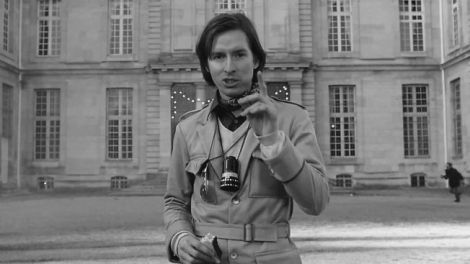
Case Study - Wes Anderson

Wes Anderson

Wesley Wales Anderson was born in Houston, Texas. His mother, Texas Ann (Burroughs), is an archaeologist turned real estate agent, and his father, Melver Leonard Anderson, worked in advertising and PR. He has two brothers, Eric and Mel. Anderson's parents divorced when he was a young child, an event that he described as the most crucial event of his brothers and his growing up. During childhood, Anderson also began writing plays and making super-8 movies. He was educated at Westchester High School and then St. John's, a private prep school in Houston, Texas, which was later to prove an inspiration for the film Rushmore (1998).

Anderson attended the University of Texas in Austin, where he majored in philosophy. It was there that he met Owen Wilson. They became friends and began making short films, some of which aired on a local cable-access station. One of their shorts wasBottle Rocket (1994), which starred Owen and his brother Luke Wilson. The short was screened at the Sundance Film Festival, where it was successfully received, so much so that they received funding to make a feature-length version. Bottle Rocket (1996) was not a commercial hit, but it gained a cult audience and high-profile fans, which includedMartin Scorsese.

Success followed with films such as Rushmore (1998), The Life Aquatic with Steve Zissou (2004), The Royal Tenenbaums (2001) and an animated feature, Fantastic Mr. Fox (2009). The latter two films earned Anderson Oscar nominations.


IMBD Biography of Wes Anderson

The Soul of the Plot - Wes Anderson


'I have a way of filming things and staging them and designing sets. There were times when I thought I should change my approach, but in fact, this is what I like to do. It's sort of like my handwriting as a movie director. And somewhere along the way, I think I've made the decision: I'm going to write in my own handwriting.'
Wes Anderson 2015

Wednesday, 6 January 2016

BFI Player - Best Films of 2015

If you seek lazy reboots and prequels, go elsewhere. These films dabble in the distinctive, be it real-life stories, potent dramas or history with a twist. They show the wild diversity of films and their creators, and they indicate a medium in rude health.

The most popular features on BFI Player in 2015

Thursday, 23 January 2014

Ones to watch in 2014

2014 is set to be another great year for film on a global scale. Below are three films coming out this year that deal with a wide and varied range of human emotion, interaction, morality, faith and tragedy.


KIDS FOR CASH is a riveting look behind the notorious judicial scandal that rocked the nation. Beyond the millions paid and high stakes corruption, KIDS FOR CASH exposes a shocking American secret.

In the wake of the shootings at Columbine, a small town celebrates a charismatic judge who is hell-bent on keeping kids in line... until one parent dares to question the motives behind his brand of justice.


Would you choose your natural son, or the son you believed was yours after spending 6 years together? Kore-eda Hirokazu, the globally acclaimed director of "Nobody Knows", "Still Walking" and "I Wish", returns to the big screen with another family - a family thrown into torment after a phone call from the hospital where the son was born.

Ryota has earned everything he has by his hard work, and believes nothing can stop him from pursuing his perfect life as a winner. Then one day, he and his wife, Midori, get an unexpected phone call from the hospital. Their 6-year-old son, Keita, is not 'their' son - the hospital gave them the wrong baby.

Ryota is forced to make a life-changing decision, to choose between 'nature' and 'nurture.' Seeing Midori's devotion to Keita even after learning his origin, and communicating with the rough yet caring family that has raised his natural son for the last six years, Ryota also starts to question himself: has he really been a 'father' all these years.


Based on the #1 New York Times best-selling book of the same name, HEAVEN IS FOR REAL brings to the screen the true story of a small-town father who must find the courage and conviction to share his son's extraordinary, life-changing experience with the world.

The film stars Academy Award nominee and Emmy award winning actor Greg Kinnear as Todd Burpo and co-stars Kelly Reilly as Sonja Burpo, the real-life couple whose son Colton (newcomer Connor Corum) claims to have visited Heaven during a near death experience. Colton recounts the details of his amazing journey with childlike innocence and speaks matter-of-factly about things that happened before his birth, things he couldn't possibly know. Todd and his family are then challenged to examine the meaning from this remarkable event.

Friday, 9 October 2009

AS Foundation Portfolio - Preliminary Task

Example of the 'Perliminary Task' AS students need to complete as part of their Foundation Portfolio.
Brief
Continuity task invloving filming and editing a character opening a door, crossing a room and sitting down in a chair opposite another character, with whom she/he then exchanges a couple of lines of diologue. This task should demonstrate match on action, shot/reverse shot and the 180-degree rule.

Friday, 12 June 2009

Documentaries

Below are some recommended documentaries that we will be viewing and discussing. By viewing them we hope to gain a clearer understanding of the medium on the documentary and how you can create an interesting and engaging story from a subject that from the outside may seem mundane.


The Boy Who's Skin Fell Off (2004)

A frank and moving film about Jonny Kennedy, an extraordinary man with a terrible condition - Dystrophic Epidermolysis Bullosa (EB) - which means his skin literally falls off at the slightest touch.

Spellbound (2002)
"Spellbound" is one of those documentaries that isn't soaked with politics or social dilemmas, but it is touches on them indirectly. It's the story of 8 kids from all over the United States, their study habits, lives, relationships with parents and personal beliefs, views and opinions. And how they make it to the National Spelling Bee Contest.

An Inconvenient Truth (2006)
An Inconvenient Truth offers a passionate and inspirational look at one man's fervent crusade to halt global warming's deadly progress in its tracks by exposing the myths and misconceptions that surround it. That man is former Vice President Al Gore, who, in the wake of defeat in the 2000 election, re-set the course of his life to focus on a last-ditch, all-out effort to help save the planet from irrevocable change.


The Bridge (2004)

People suffer largely unnoticed while the rest of the world goes about its business. This is a documentary exploration of the mythic beauty of the Golden Gate Bridge, the most popular suicide destination in the world, and those drawn by its call.
Fahrenheit 911 (2004)

In this film, muckraker Michael Moore turns his eye on George W. Bush and his War on Terrorism agenda. He illustrates his argument about how this failed businessman with deep connections to the royal house of Saud of Saudia Arabia and the Bin Ladins got elected on fraudulent circumstances and proceeded to blunder through his duties while ignoring warnings of the looming betrayal by his foreign partners. When that treachery hits with the 9/11 attacks, Moore explains how Bush failed to take immediate action to defend his nation, only to later cynically manipulate it to serve his wealthy backers' corrupt ambitions.