Showing posts with label Camera Shots. Show all posts

Tuesday, 27 September 2016

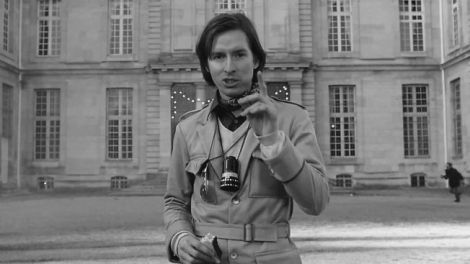
Case Study - Wes Anderson

Wes Anderson

Wesley Wales Anderson was born in Houston, Texas. His mother, Texas Ann (Burroughs), is an archaeologist turned real estate agent, and his father, Melver Leonard Anderson, worked in advertising and PR. He has two brothers, Eric and Mel. Anderson's parents divorced when he was a young child, an event that he described as the most crucial event of his brothers and his growing up. During childhood, Anderson also began writing plays and making super-8 movies. He was educated at Westchester High School and then St. John's, a private prep school in Houston, Texas, which was later to prove an inspiration for the film Rushmore (1998).

Anderson attended the University of Texas in Austin, where he majored in philosophy. It was there that he met Owen Wilson. They became friends and began making short films, some of which aired on a local cable-access station. One of their shorts wasBottle Rocket (1994), which starred Owen and his brother Luke Wilson. The short was screened at the Sundance Film Festival, where it was successfully received, so much so that they received funding to make a feature-length version. Bottle Rocket (1996) was not a commercial hit, but it gained a cult audience and high-profile fans, which includedMartin Scorsese.

Success followed with films such as Rushmore (1998), The Life Aquatic with Steve Zissou (2004), The Royal Tenenbaums (2001) and an animated feature, Fantastic Mr. Fox (2009). The latter two films earned Anderson Oscar nominations.


IMBD Biography of Wes Anderson

The Soul of the Plot - Wes Anderson


'I have a way of filming things and staging them and designing sets. There were times when I thought I should change my approach, but in fact, this is what I like to do. It's sort of like my handwriting as a movie director. And somewhere along the way, I think I've made the decision: I'm going to write in my own handwriting.'
Wes Anderson 2015

Friday, 23 September 2016

Cinematography

What is cinematography?

Well, the name comes from combining two Greek words: kinema, which means movement, and graphein, which means to record. In film, cinematography refers to the photographing of the movie itself. The person in charge of this is the cinematographer, also known as the director or photography or the DP. 

Understanding Cinematography

In the hierarchy of a film set, the director's two key creative people in the crew are the art director and the cinematographer. The art director is in charge of the art department and the cinematographer is in charge of the camera, electric and grip departments. The camera department maintains the camera and has it ready for the shot while the grips and electrics handle the lighting. Electrics set the lights and run power to them and grips shape the light by using flags and diffusion. Grips also provide support to camera department when there is camera movement for the scene. An example of this is a dolly shot.


Wednesday, 24 February 2016

Tuesday, 8 December 2015

Pre, Pro & Post


Script to Scream is an eight part series following the UK creative team behind Bloody Cuts as they produce their upcoming film, The Outer Darkness. Four of these episodes can be watched below. Producers and Directors Ben Franklin and Anthony Melton along with screenwriter Joel Morgan and Director of Photography Jonny Franklin provide incredibly detailed access to the team's inner workings and approach to film-making as each episode focuses on a different aspect of pre-production, production and post-production.

Episode 1
In this episode, the team begins pre-production; including location scouting, the writing process and setting the timeline of work ahead of them to create The Outer Darkness.


Episode 2
As the team prepares for principal photography, meticulous planning becomes an essential part of coordinating all of the moving parts and 3rd parties contributing to the short film. Also, The Outer Darkness characters are starting to move from concept to reality as the team gets its first look at some of the evil creations from Special FX designer, James Greenwood.


Episode 3
The Outer Darkness team finally realizes the results of their meticulous planning and principal shooting begins. We also get our first look at the cast and learn how the team motivates them to give the best performances possible.


Episode 4
In episode 4 of Script to Scream the team discovers that unique locations prove to be challenging but worth the effort as the team finishes principal photography and the cast and crew work extremely hard to ensure that before editing begins everything that will be needed for the film is accomplished.


The Outer Darkness
The Outer Darkness is Part 1 of a terrifying new web series from the creators of popular horror show Bloody Cuts.

“On Friday evenings in Lynnsmouth Community Centre, meets a group led by Father Jonathan Crowe. Together they share their stories – tales of strange occurrences, horrific events and bizarre encounters that have scarred their lives. Tonight, a young tormented woman called Jenny will share a story of her experience with a game of chance that sealed the fate of her family…”


Also from Bloody Cuts
Set on one fateful night, six friends gather for their monthly 'games night'... and accidentally unleash a demonic force that might tear them - and their friendships - to pieces. 

'Don't Move' is the 8th slice in Bloody Cuts' anthology of short horror films, made by a young team of UK film-makers on low budgets. Directed by Anthony Melton and written by David Scullion it stars Rachel Bright and Jake Hendriks alongside Kate Braithwaite, Beth Cooper, Ian Whyte, Calvin Dean and Martin Skipper.


To learn more about The Outer Darkness visit http://www.theouterdarkness.co.uk/

To view previous work from the team visit http://www.bloodycuts.co.uk/

Thursday, 17 September 2015

Rule of Thirds

The majority of shots when framed follow the convention 'The Rule of Thirds'. This refers to where the action or the subject is placed in the frame.

Using the clip below I can demonstrate this convention.


Thursday, 24 January 2013

Comparing the best & the worst

Below are two fight scenes from different productions. Comparing like scene of different quality highlights the technical and creative aspects of the scene and allows you to identify what makes a good scene more easily.

Watch the scenes below and identify how they and used the various criteria for film language to create scenes which although have simular content actually have very different results.


Pay attention to:
  • Camera shot
  • Camera movement
  • Mise-en-scene
  • Location
  • Setting
  • Framing
  • Editing
  • Character
  • costume
  • Props
  • Dialogue
  • Lighting
  • Treatment